The Weekly Dose - Frozen
"These strategies help us survive physically, but when they’re applied to our mental and emotional functioning, we get into trouble. When there’s no enemy to defend against, we turn on ourselves."

Hello,
Full quote: “I look at it this way: the instinctive response to danger – the stress response – consists of fight, flight, or freeze. These three strategies help us survive physically, but when they’re applied to our mental and emotional functioning, we get into trouble. When there’s no enemy to defend against, we turn on ourselves. “Fight” becomes self-criticism, “flight” becomes self-isolation, and “freeze” becomes self-absorption, getting locked into our own thoughts.”- Christopher K. Germer
I shared a post on LinkedIn about fight, flight, freeze… and fawn. I was processing why I keep stopping or stalling. It didnt feel like a self sabotaging act, it felt like it was trying to tell me something, like I was frozen for a reason. And before I knew it I was down a rabbit hole of exploring response under pressure. I found this quote, above. It talked about emotions turning on ourselves. But I held the thought that what if it was also emotions protecting ourselves. So slightly at odds with the quote but inspired to dig further. I’ve included the blog I ended up writing below. A very rough draft of thoughts, but I found intriguing and helpful.
So, I was able to relax out of being frozen, not exactly melting, but easing out, and get on with what I was stalling. Sending out pitches for people I’d love to work with, sharing Change Mastery with leaders to get their opinions, gather interest, sending my book to 15 people who I wanted to read it and work with. So the week has felt productive, and like seeds are being sown in the right direction. And not just scattered. My freeze position was time to think I little bit more, target the pitches, be more focused.
I’ve just finished a brilliant programme with Aimee Bateman (highly recommend!). Her words were ‘time to get radically focused’. And that’s how indeed to be over the next 3 months. No distractions! (Which is a key skill sometimes Distractology).
So, onwards. Next week lots of online and in-person workshops coming up. And so a reminder not to forget the energy needed to deliver these well.
And the Change Mastery Day content to finalise. Which is looking good to me!
Sign up here. If you are navigating change right now, take your place. See you there.
Have a great weekend, and if you are frozen with something, it might be trying to tell you something!
eleanor
I’m speaking at Thinking Digital conference - 21 May - Newcastle
Follow me on LinkedIn here > eleanor - say hello
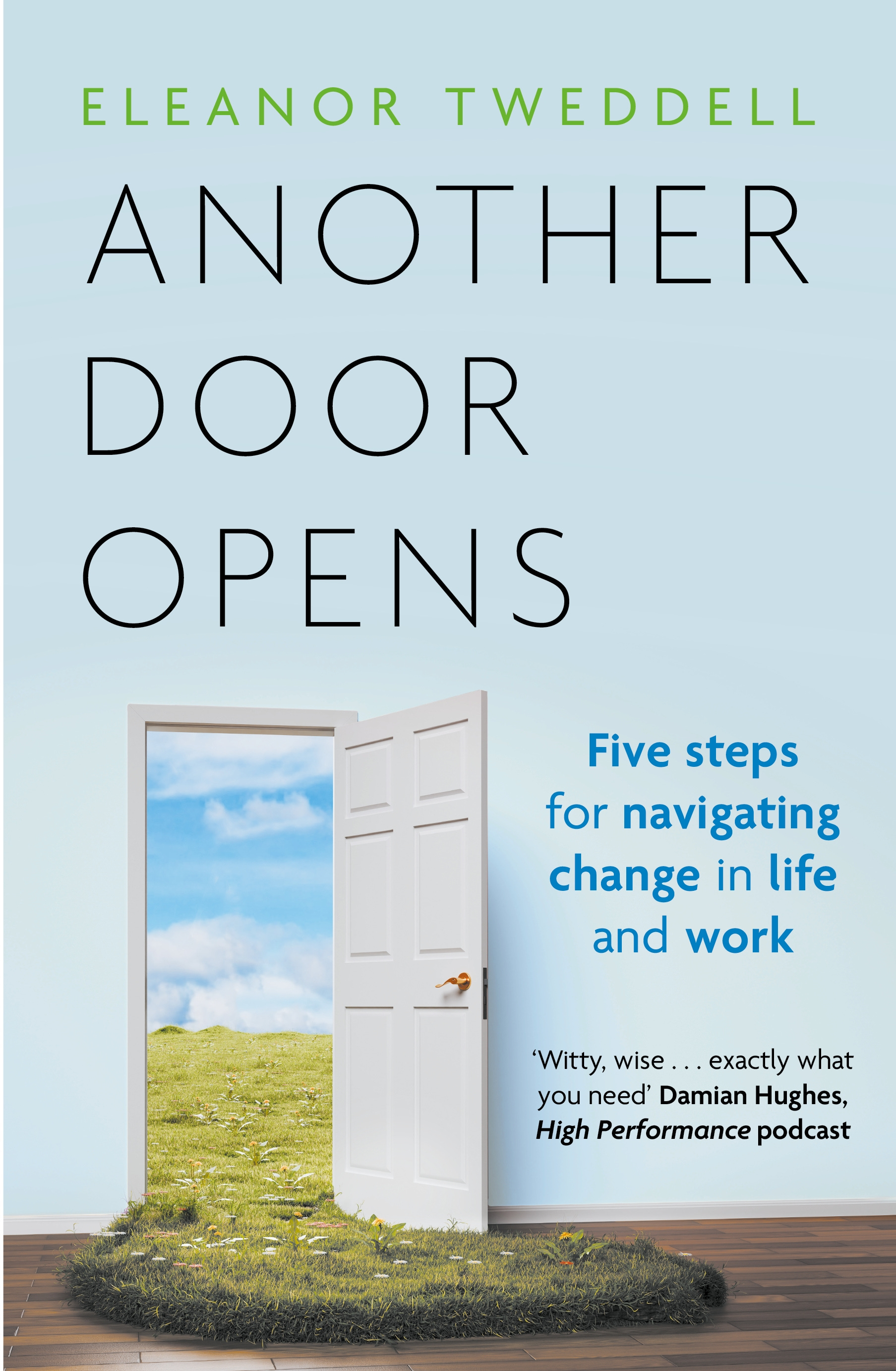
Read and review my book here > book - you’ll make me so happy :)
Blogging
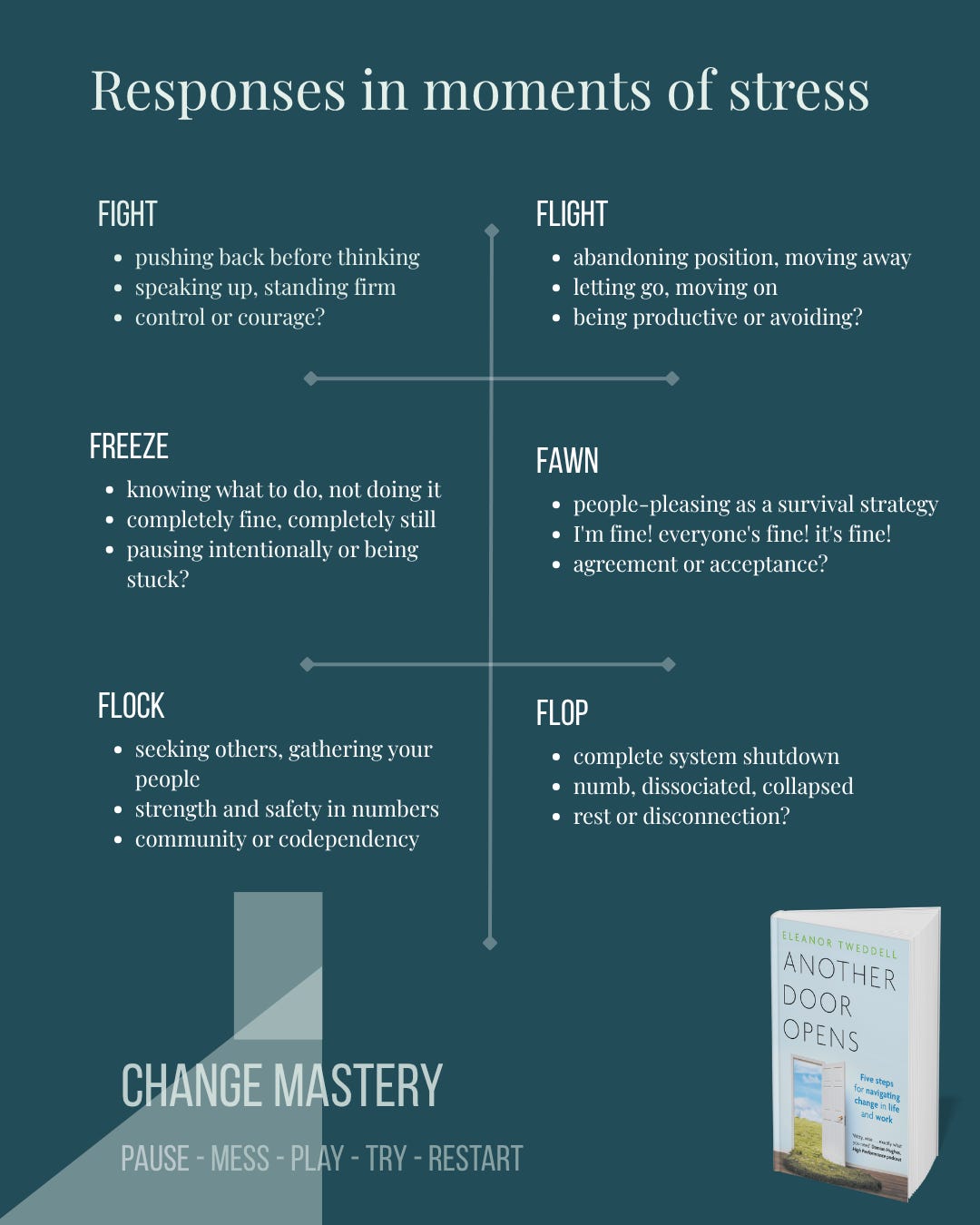
You’ve heard of fight or flight (probably). But did you know there are actually, now, six stress responses and that understanding all of them might be one of the most useful things you can do when change is all around?
The full set is fight, flight, freeze, fawn, flock, and flop. And yes, they all start with F. Which means if you ever wanted a shorthand for the whole framework, you’re looking at FFF and FF. Or, as I couldn’t help noticing, FFS. Which is, frankly, a pretty accurate description of how change feels sometimes.
Here’s the thing though. None of these responses are bad. They’re not character flaws or signs of weakness. They’re data. Each one is your nervous system trying to keep you safe and if you can learn to read them rather than just react from them, they become genuinely useful navigational tools.
When you notice yourself pushing back hard in a meeting, that’s information. When you suddenly want to reorganise your entire desk instead of making a difficult phone call, that’s information too. When a colleague goes very quiet during a restructure, or another one calls three team huddles in a week, information, information, information.
The six F responses give you a framework for understanding what’s happening, in yourself and in the people around you. Because change doesn’t just affect you. It lands differently on different people, and knowing that can make you a far more generous and effective colleague, manager, or team member.
This month’s blog explores the history of the framework, what each response looks like in real life, from what Ive understood, and how to use it to navigate change with a little more curiosity and a little less judgement.
To explore more, ask yourself:
1. Which F shows up first for you when change arrives and do you recognise it in the moment, or only in hindsight?
Fight, flight, freeze, fawn, flock, flop - there’s no wrong answer.
2. Think about someone in your life who navigates change very differently to you. Which response do you think is their default, and how has that landed between you?
Not to judge just to get curious. Their F is data too.
3. What has your most recent stress response actually been trying to tell you?
Underneath the reaction, what did it reveal about what matters to you, what feels unsafe, or what you might need more of right now.
Listening
Instead of something to listen to, how about something to join in! My dear friend Nicole Donnelly runs Hello Moxie, a brilliant programme of mentorship and community for women in tech. Find out more here. The masterclass is for anyone curious, and you’ll get to know more about Hello Moxie.

Reading
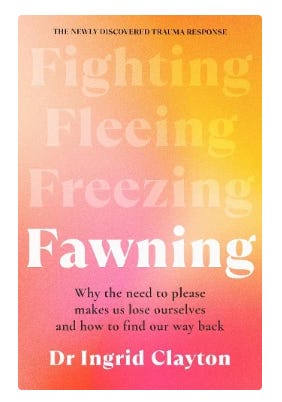
Because Ive been searching for ‘fight flight freeze fawn’ for the last few days, the algorism then showed me a post about this book. So I haven’t read it yet. But now on my list!…
Are you leading change, navigating change at work, want change to feel better?
You need space to think, explore and decide how, why, what next.
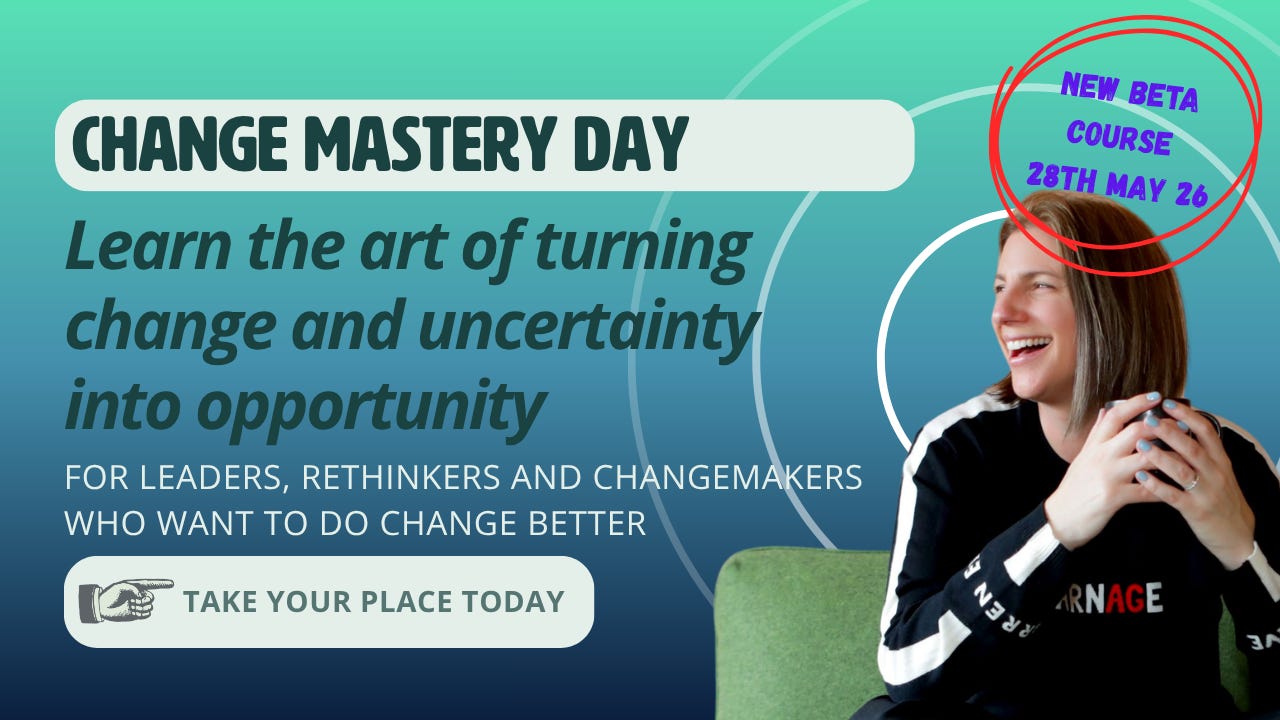
It’s time to do change differently. Learn the art of turning change and uncertainty into opportunity.
Change Mastery Day - 28th May 26
CURRENTLY BETA PRICE
For leaders, rethinkers, change makers - who want to do change better.
I’ve been asked if this is also for people navigating job loss; yes, it’s all change mindset. Time to think about what to do next. How to rethink work, what it looks like, how you make it work for you.
“This is one of the most humane, thoughtful and practical books I have read on navigating change. It meets you exactly where you are, especially if you are facing a transition you did not plan, did not want, or did not yet have the language for. Eleanor writes with clarity and deep empathy. It feels like being guided by a trusted friend rather than lectured by an expert.
What makes this book stand out is how grounded it is in real experience. It addresses the emotional reality of endings, the loss of identity that often comes with career change, and the quiet pressure to immediately know “what’s next.” The focus on self awareness, rest, letting go, curiosity and play is both refreshing and necessary. These are not abstract ideas. They are practical, accessible and deeply reassuring.
There were so many moments that resonated with my own journey and the journeys of people I coach. The reflections are powerful without being heavy, and the frameworks help you make sense of where you are without judgement.
This book should be required reading for anyone going through career transition, redundancy or reinvention, and frankly for organisations supporting people through change. I have already started recommending it widely.” - Patrice Gordon, Speaker and Author, Reverse Mentoring